Why Is My Chicken Rubbery and chewy? (6 Proven Causes + Easy Fixes)
Chicken is one of the easiest proteins to cook but it’s also one of the easiest to mess up. If you’ve been wondering “why is my chicken rubbery?”, you’re definitely not alone. It’s one of the most common cooking problems, especially with chicken breast.
Most people think rubbery chicken means it’s undercooked, but in reality, it’s usually the opposite. Small mistakes like heat control, timing, and preparation can completely change the texture.
In this guide, you’ll learn exactly why chicken turns rubbery and how to fix it so it stays tender and juicy every time.
Why Is My Chicken Rubbery?
Chicken becomes rubbery when it loses too much moisture and tightens during cooking. This usually happens from overcooking, wrong heat levels, or not resting the meat after cooking. The chicken may still be fully cooked, but the texture becomes firm and chewy instead of juicy.
6 Real Reasons Your Chicken Turns Rubbery
1. Overcooking the Chicken
Cooking beyond the ideal temperature causes moisture loss and tough texture, especially in chicken breast.
Fix: Cook just until it reaches 165°F (75°C) and remove it from heat immediately.
2. Cooking on the Wrong Heat Level
Cooking on very high heat can make the outside overcook before the inside is done, while low heat for too long slowly dries the chicken out. Both lead to a rubbery texture.
Fix: Use medium to medium-high heat for balanced, even cooking.
3. Skipping Rest Time After Cooking
Cutting chicken immediately after cooking causes the juices to escape onto the plate instead of staying inside the meat. This leaves the texture dry and rubbery even if it was cooked correctly.
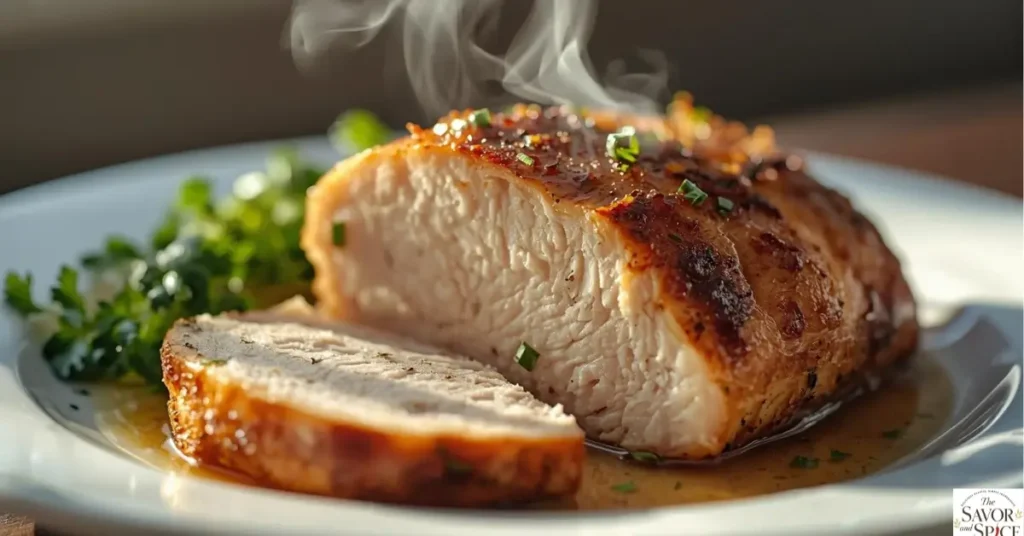
Fix: Let chicken rest for 5 minutes before slicing so the juices redistribute.
4. Cooking Chicken Straight From the Fridge or Freezer
Cold chicken cooks unevenly outside overcooks while the inside struggles to catch up. This often results in rubbery edges and inconsistent texture. This mismatch is a major reason for chewy or tough texture.
Fix: Let chicken sit at room temperature for 15-20 minutes before cooking, or thaw it properly if frozen.
5. Uneven Thickness (Leads to Overcooking)
If one part of the chicken is thicker than the other, the thinner side will overcook while waiting for the thicker part to finish. The result is a mix of dry, chewy, and rubbery textures in the same piece.
Fix: Pound the chicken to an even thickness before cooking.
6. Using Low-Quality or “Woody” Chicken Breast
Sometimes the issue isn’t your cooking it’s the chicken itself. Chicken breast is lean and easy to overcook, while thighs are naturally more forgiving.
“Woody” chicken breast has a naturally tough, rubbery texture due to muscle fiber issues.
Fix: Choose smaller, fresh-looking cuts or switch to chicken thighs, which are more forgiving and stay juicy.
Is Rubbery Chicken Overcooked or Undercooked?
In most cases, rubbery chicken is overcooked, not undercooked. Overcooking removes moisture and makes the meat firm.
Undercooked chicken, on the other hand, feels soft in the center and is unsafe to eat.
Best check: Use a thermometer (safe at 165°F / 75°C)
Why Chicken Becomes Rubbery After Cooking From Frozen
Cooking chicken directly from frozen causes uneven heating. The outside cooks too fast while the inside is still thawing, leading to a tough outer texture and inconsistent results.
Another issue is moisture loss. As ice crystals melt during cooking, they release water unevenly, which affects how the meat fibers set. Instead of cooking evenly, the structure tightens in patches, leading to a chewy bite.
Common Mistakes With Frozen Chicken
- Cooking chicken directly from freezer without thawing
- Using high heat to “speed it up”
- Not checking internal temperature properly
- Expecting frozen chicken to cook like fresh chicken
Best Way to Thaw Chicken Safely
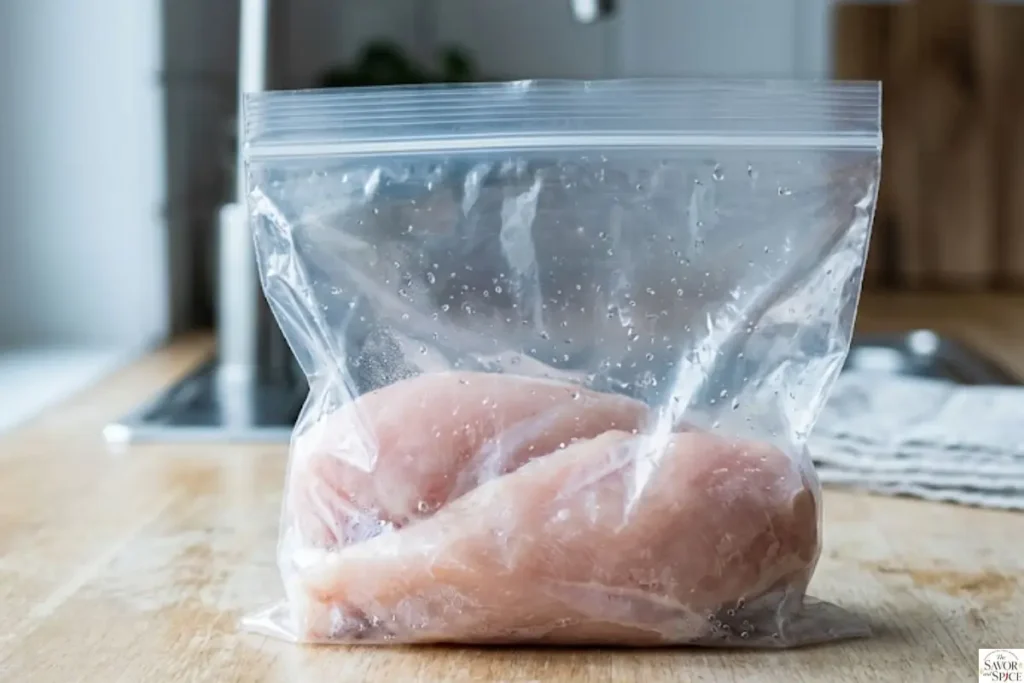
The safest and most effective method is slow thawing in the fridge. This keeps the temperature consistent and allows the meat to relax evenly before cooking.
If you’re short on time, cold water thawing is faster but the chicken must be sealed properly and cooked immediately afterward.
How to Fix Rubbery Chicken (Simple Solutions That Work)
Once chicken turns rubbery, you can’t fully reverse the texture—but you can improve it and make it enjoyable instead of tough and unpleasant.
The key is not trying to “restore” it, but to rebuild moisture and mask the toughness.
Slice It the Right Way (Against the Grain)
One of the quickest fixes is changing how you cut it. Slicing chicken against the grain shortens the muscle fibers, which immediately makes the texture feel softer and easier to chew.
This works especially well for chicken breast or grilled chicken
Add Moisture Back With Sauce or Broth
Rubbery chicken often feels dry, so adding moisture can significantly improve it. Warm sauces, gravies, or even a light broth can help soften the texture and make it more pleasant to eat.
Great options:
- Chimichurri sauce
- Creamy mushroom sauce
- Chicken broth drizzle
Turn It Into a New Dish
Sometimes the best fix is not trying to “save” the texture but repurposing it. When chicken is mixed with other ingredients, the rubbery texture becomes much less noticeable.
Try using it in:
- quick dinner Wraps or sandwiches
- Fried rice or noodles
- Chicken caesar salads or creamy pasta
Use Heat Gently (If Reheating)
If you’re reheating rubbery chicken, avoid high heat. Instead, warm it slowly with a bit of liquid so it doesn’t dry out further.
Tip: Cover it while reheating to trap moisture.
How to Cook Chicken So It’s Never Rubbery Again
The best way to avoid rubbery chicken is to stop relying on cooking time and start controlling how heat affects texture. Most texture problems happen before you even realize the chicken is overcooking.
Once you fix your method, rubbery chicken becomes rare not random.

Control the Heat Instead of Relying on Time
Many people cook chicken on high heat thinking it will finish faster, but this often leads to a tough, rubbery texture. Gentle, steady heat allows the chicken to cook evenly without drying out the inside.
Medium heat works best for most stovetop cooking methods.
Use a Thermometer for Perfect Doneness
Guessing when chicken is done is one of the biggest reasons it turns rubbery. A food thermometer removes uncertainty and helps you stop cooking at the exact right moment.
Let the Chicken Rest Before Cutting
Resting allows the juices to redistribute inside the meat instead of spilling out on the cutting board. This simple step makes a big difference in keeping chicken tender and juicy.
Don’t Skip Proper Preparation
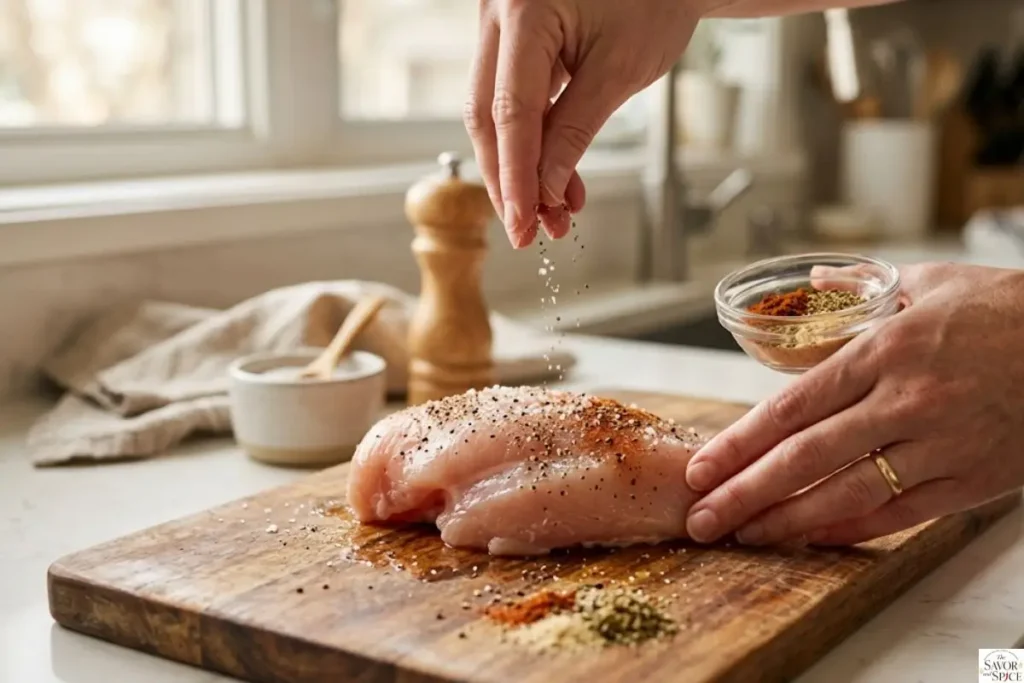
How you prepare chicken before cooking matters just as much as the cooking itself. Even thickness, proper seasoning, and gentle handling all help prevent toughness.
If you want a deeper guide on keeping chicken juicy and soft every time, Read this guide on Chicken Breast Without Drying (Juicy & Tender Method)
Simple Juicy Chicken Guide (Never Rubbery Again)
This is a straightforward method I go with to cook chicken that stays tender, juicy, and never turns rubbery.
Ingredients
- 2 chicken breasts (or thighs for extra juiciness)
- 1–2 tbsp olive oil
- 1 tsp salt
- 1/2 tsp black pepper
- 1 tsp garlic powder
- 1/2 tsp paprika (optional)
- Optional: lemon juice or yogurt for extra tenderness
Simple Cooking Steps
- Prepare the chicken properly
Pat it dry and make sure pieces are evenly thick for even cooking. - Season well
Add salt, pepper, and spices. Let it sit for 10–15 minutes if possible. - Heat the pan correctly
Use medium heat and let the pan get properly hot before adding oil. - Cook without moving too early
Place chicken in the pan and let it cook undisturbed for 5–6 minutes on one side. - Flip once and finish cooking
Cook the other side until golden and fully done. - Rest before slicing
Let it rest for 5 minutes before cutting so juices stay inside.

Key Timing + Temperature Rules
- Cook until internal temperature reaches 165°F (75°C)
- Avoid overcooking beyond this point
- Rest for at least 5 minutes before cutting
- Medium heat = best balance for juicy texture
Pro Tip
Chicken thighs are naturally more forgiving and stay juicy even if slightly overcooked, making them a great option for beginners.
FAQs About Rubbery Chicken
Why is my chicken chewy instead of juicy?
Chicken becomes chewy when it is overcooked, cooked at the wrong heat, or not rested properly after cooking. These mistakes tighten the meat fibers and remove internal moisture, leading to a tough texture instead of a juicy bite.
Can rubbery chicken be fixed?
You can’t fully restore the original texture, but you can improve it. Slicing it thin, adding sauces or broth, or using it in dishes like wraps or rice bowls can make it much more enjoyable.
Is rubbery chicken safe to eat?
Yes, rubbery chicken is usually safe to eat as long as it has reached a safe internal temperature of 75°C (165°F). The issue is texture, not safety.
How do restaurants keep chicken so tender?
Restaurants control temperature precisely, use proper cuts, and avoid overcooking. They also rest meat correctly and often use techniques like brining or marination to improve moisture retention.
More Recipes To Try
Final Thoughts: How to Avoid Rubbery Chicken Every Time
Rubbery chicken isn’t random it’s the result of a few small cooking mistakes like overcooking, using the wrong heat, or skipping simple steps like resting the meat. The good news is that once you understand these basics, it becomes very easy to avoid.
Cooking juicy, tender chicken is not about complicated techniques. It’s about control. When you manage heat properly, cook to the right temperature, and give the chicken time to rest, the texture improves dramatically every single time.
Try these simple fixes the next time you cook chicken and notice the difference in texture immediately. Once you get the basics right, juicy chicken becomes your new normal.