
Why Are My Pancakes Flat? 10 Reasons & Simple Fixes for Fluffy Pancakes
Flat pancakes usually happen because of a few simple but predictable mistakes -not bad recipes. If you’re wondering why are my pancakes flat, the answer almost always comes down to three things: expired or weak leavening, incorrect batter consistency, or improper pan heat.
The good news is that each of these issues is easy to fix. Once you understand how they affect rise and texture, you can consistently make tall, fluffy pancakes every time.
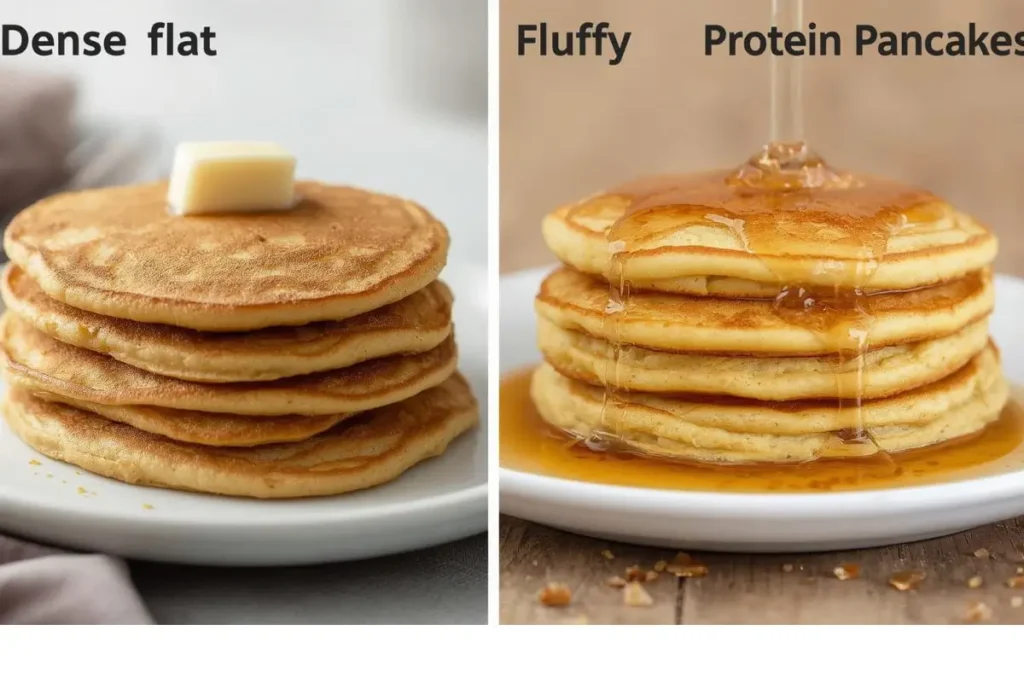
Why Are My Pancakes Flat? Quick Diagnosis (Fast Answer)
Don’t have time to read the full breakdown? Use this fast diagnosis first.
Quick Diagnosis: Match Your Symptom to the Cause
| What You’re Seeing | Most Likely Cause | Fastest Fix |
|---|---|---|
| Flat + no rise at all | Expired baking powder | Test with hot water → replace if no fizz |
| Flat + spreads across pan | Batter too thin | Add flour 1 tbsp at a time |
| Flat + dense and heavy | Overmixing | Fold gently and rest batter for 10 minutes |
| Flat + burns outside, raw inside | Heat too high | Lower to medium-low and let pan stabilize |
| Flat + pale and gummy | Heat too low | Preheat pan for at least 2 minutes |
| Flat + chewy texture | Thin batter + overmixing | Fix batter ratio + use gentle folding |
If you’ve found your issue, jump straight to the fix section below.
If you’re not sure yet, continue reading , the next section explains exactly why each of these problems happens and how to prevent them permanently.
Chef Insight: Why Pancakes Fail Even With Good Recipes
Most pancake problems don’t come from bad recipes. They come from how three simple kitchen processes interact: leavening, gluten formation, and heat.
Pancakes rely on a balance of chemistry and timing. When baking powder activates, it creates carbon dioxide bubbles that help the batter rise. If that leavening is weak or expired, there’s no gas to lift the pancake, no matter how perfect the recipe is.
At the same time, flour mixed with liquid forms gluten. A small amount of gluten is necessary to hold structure, but too much (usually from overmixing) creates a tight network that traps the pancake flat instead of allowing it to expand.
Finally, heat controls how those bubbles behave. If the pan is too cold, the batter spreads before it sets. If it’s too hot, the outside firms up too quickly and locks the pancake in a flat shape before the inside can rise.
When all three elements work together, such as active leavening, balanced mixing, and correct heat, pancakes rise properly and turn out light and fluffy. When even one is off, flat pancakes are the result.
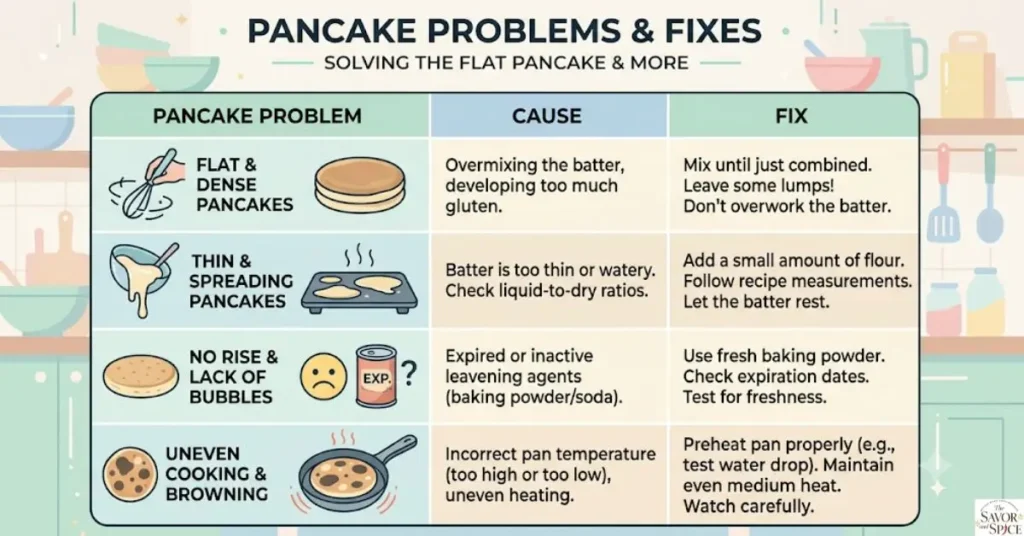
The 10 Most Common Reasons Your Pancakes Are Flat
Cluster 1: Leavening Problems
These issues prevent your pancakes from rising, no matter how good your technique is.
1. Expired or Weak Baking Powder
Baking powder is responsible for creating the air bubbles that make pancakes rise. If it’s expired or stored in a humid environment, it loses its power completely, resulting in flat pancakes with no lift.
Fix: Test it in hot water. If it doesn’t bubble strongly, replace it before your next batch.
2. Incorrect Measurement of Baking Powder
Too little baking powder won’t generate enough lift, while too much can cause bubbles to form and collapse too quickly, leading to dense, flat pancakes.
Fix: Always use level teaspoons, never heaped scoops.
Cluster 2: Mixing Problems
How you mix your batter has a direct impact on texture and rise.
3. Overmixing the Batter
Overmixing develops too much gluten in the flour, creating a tight structure that prevents pancakes from rising properly. This is one of the most common causes of flat, chewy pancakes.
Fix: Mix only until no dry flour remains. Lumps are completely fine.
4. Incorrect Mixing Technique
Using a whisk aggressively or stirring in circles can overdevelop gluten even if you don’t overmix by time.
Fix: Use a spatula and gently fold the batter using a scoop-and-turn motion.
Cluster 3: Batter Structure Problems
These affect whether your batter can physically rise on the pan.
5. Batter Too Thin
Thin batter spreads too quickly in the pan, preventing height and structure from forming.
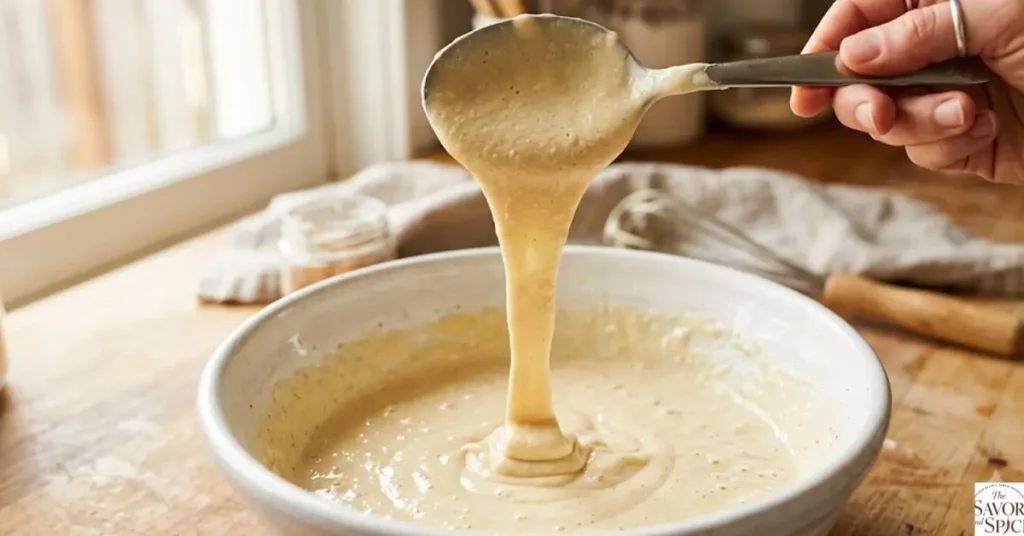
Fix: Add flour gradually until batter falls in a slow, thick ribbon.
6. Batter Too Thick
Overly thick batter prevents air bubbles from moving properly, leading to heavy, undercooked centers.
Fix: Add small amounts of milk until batter flows slowly but steadily.
7. Wrong Flour Type
High-protein flour (like bread flour) creates too much gluten, while very low-protein flour can cause weak structure.
Fix: Use all-purpose flour for balanced results.
8. Too Many Eggs
Excess eggs make the batter dense and firm too quickly, trapping it before it can rise.
Fix: Stick strictly to recipe ratios when scaling ingredients.
Cluster 4: Cooking Environment Problems
Even perfect batter can fail if the pan and heat are wrong.
9. Incorrect Pan Temperature (Too Low or Too High)
Low heat prevents steam formation, while high heat sets the outside too quickly, stopping rise in the middle.
Fix: Preheat pan for 2 minutes on medium heat and adjust as needed.
10. Old Ingredients or Poor Storage
Stale flour, expired milk, or improperly stored ingredients can weaken batter performance and reduce rise.
Fix: Always check ingredient freshness before starting.
How to Fix Flat Pancakes Right Now (Step-by-Step Rescue)
You’re mid-batch. Here’s what to do immediately.
Fix 1: Thin or Thick Batter Consistency
Spoon a little batter onto a plate and tilt it. Runs immediately? Too thin – fold in flour a tablespoon at a time. Doesn’t move at all? Too thick – add a splash of milk. You want it to spread slowly into a round shape over 3-4 seconds.
Fix 2: Get Your Heat Right
Take the pan off the heat for 30 seconds. Return it to medium-low. Give it 60 seconds to stabilize. Pour a small test pancake, if it takes about 90 seconds to bubble across the top before flipping, your heat is perfect.
Fix 3: Rest the Batter
If you’ve already mixed, rest the batter for at least 10 minutes before continuing. This won’t undo overdeveloped gluten completely, but the relaxation time makes a noticeable difference in rise. Cover the bowl and step away.
Fix 4: Add a Leavening Boost (emergency trick)
If you suspect your baking powder is weak and you don’t have fresh, try this: add ¼ teaspoon of baking soda plus ½ teaspoon of white vinegar or lemon juice to your batter and gently fold it in. This creates an immediate acid-base reaction that generates bubbles. It’s not a substitute for fresh baking powder, but it can save a batch in a pinch.
Quick Rescue Checklist
Run through this checklist before your next pour.
- Batter falls in a slow, thick ribbon – not water, not cement
- Pan has been preheating on medium heat for at least 2 minutes
- Baking powder tested or recently opened
- Batter has rested at least 5–10 minutes since mixing
- You folded, not whisked
Related Pancake Recipes You Must Try Next
Now that you understand exactly why pancakes turn flat and how to fix them, the next step is to apply these techniques to real recipes. These guides will help you practice proper mixing, batter control, and heat management so you consistently get fluffy pancakes every time.
Core Pancake Recipes
These are your foundational recipes and should be your starting point if you want to master technique:
- Best Pancake Recipes (complete pancake collection and starting hub)
- Classic Pancakes (the essential base recipe for perfect texture and rise)
- Fluffy Buttermilk Pancakes (extra lift from acid-base reaction for maximum fluffiness)
Flavor Variations
Once you’ve mastered the basics, try these for different textures and flavors:
- Banana Pancakes (naturally sweet and moist, requires careful mixing)
- Chocolate Chip Pancakes (rich, indulgent, and slightly heavier batter)
- Blueberry Pancakes (fruit adds moisture and affects rise – great for learning batter control)
Protein & Healthy Pancakes
These recipes test your technique even further due to ingredient density changes:
- Protein Pancakes (higher density batter – requires precise mixing for fluffiness)
- Matcha Chia Pancakes (unique texture with added fiber and absorption challenges)
Frequently Asked Questions
Why are my pancakes flat and rubbery?
Flat and rubbery together almost always means overmixing combined with a batter that’s too thin. Overmixing develops excessive gluten; thin batter lets the pancake spread before it can set. Fix both at once: adjust your batter to ribbon consistency, fold gently with a spatula, and rest for 10 minutes before cooking.
Why do my pancakes not rise at all?
Start with the baking powder. Test it in hot water – if it doesn’t bubble aggressively, replace it immediately. If the baking powder is fine, check batter thickness (too thin = no rise) and pan heat (too low = no steam lift). These three cover 95% of “no rise” situations.
Can I fix pancake batter after mixing too much?
Partially. You can’t undo gluten development, but a 10–15 minute rest allows the gluten to relax significantly. Your pancakes won’t be quite as fluffy as properly mixed batter would produce, but they’ll be noticeably better than cooking immediately. Next batch: fold and stop at 10–15 strokes.
Should pancake batter be thick or runny?
Thick, but pourable. The batter should flow slowly off a spoon in a thick, steady ribbon not splash like water and not plop off in a solid lump. When poured onto a pan, it should spread slowly into a round shape over a few seconds, not rush flat or refuse to move.
Does resting pancake batter really make a difference?
Yes — and it’s one of the most underrated steps in pancake making. Resting allows gluten strands to relax (so pancakes puff more freely) and lets starch granules fully hydrate (so the batter cooks more evenly). Even 5 minutes makes a noticeable difference. Ten minutes is better.
What’s the best pan for fluffy pancakes?
A heavy-bottomed pan, cast iron or a thick nonstick, distributes heat more evenly than a thin pan, which eliminates hot spots that cause uneven browning and inconsistent rise. If you’re consistently getting flat spots on one side of your pancakes, uneven heat distribution from a thin pan is a likely cause.
Final Thoughts
Flat pancakes usually come down to three things: weak leavening, unbalanced batter, or incorrect heat. Fix even one of these and you’ll see improvement. Fix all three, and consistently fluffy pancakes become easy.
Use the diagnosis table at the top to quickly match your symptoms to the cause. Then follow the rescue checklist before your next batch to correct the issue in real time. Finally, build simple habits, measure accurately, rest your batter, and control your heat to prevent flat pancakes altogether.
For more practice, explore our Best Pancake Recipes collection and apply what you’ve learned. With the right technique, tall and fluffy pancakes are much easier than they seem.