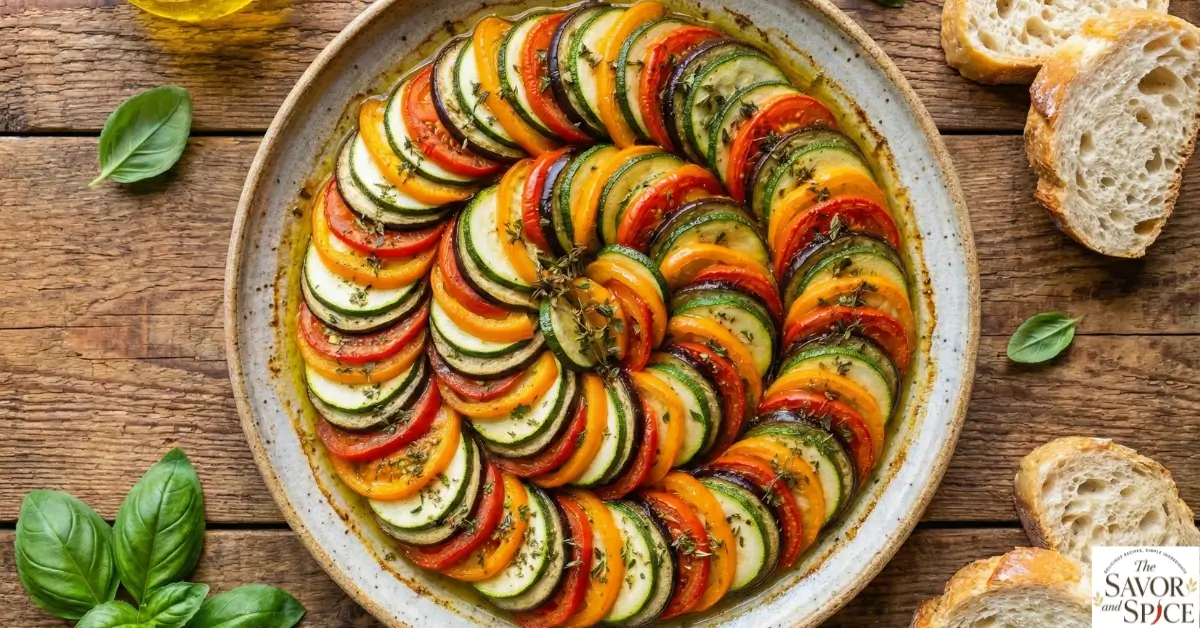
Looking for a colorful, flavorful, and wholesome meal that’s both satisfying and easy to make? This easy homemade ratatouille recipe is your answer. Bursting with fresh, garden-picked vegetables like eggplant, zucchini, and tomatoes, it’s a feast for both the eyes and the taste buds.
Whether you’re planning a light lunch, a cozy dinner, or a meatless meal that even picky eaters will love, this classic French dish is surprisingly simple to prepare. With just a little chopping and a splash of olive oil, you can create a vibrant, aromatic meal that tastes as if it came straight from a bistro in Provence.
Perfect for beginners and seasoned cooks alike, this recipe combines convenience, flavor, and nutrition in one beautiful dish. Follow along, and I’ll guide you step by step to make a ratatouille that’s soft, tender, and bursting with garden-fresh goodness. I hope you’ll enjoy this recipe if you are a busy girl.
What Is Ratatouille and Why You’ll Love It
Ratatouille is a classic French vegetable stew loved worldwide for its vibrant flavors and stunning presentation. Here’s why I fell in love with this Easy Recipe and you’ll fall in love with it too:
- A Feast for the Eyes and Taste Buds – With layers of colorful vegetables like eggplant, zucchini, and tomatoes, ratatouille is as visually appealing as it is delicious.
- Healthy and Wholesome – Packed with fresh, seasonal vegetables, it’s a perfect meatless option for a nutritious lunch or dinner.
- Easy to Make at Home – This easy homemade ratatouille recipe transforms simple ingredients into a flavorful dish without complicated techniques.
- Versatile for Any Meal – Serve it as a main dish with crusty Herb and garlic bread or pasta, or as a side dish alongside your favorite proteins.
- A Timeless French Classic – Rooted in French culinary tradition, it’s a dish that combines simplicity, freshness, and elegance in every bite.
Why This Homemade Ratatouille Recipe Stands Out
What makes this easy homemade ratatouille recipe special is how it balances simplicity, flavor, and presentation. Unlike complicated recipes, it doesn’t require hours in the kitchen with just a little chopping, a splash of olive oil, and some fresh vegetables, and you’ll have a meal that looks and tastes gourmet.
This recipe is beginner-friendly, making it perfect for anyone who wants to try French cuisine at home without stress. The vegetables are cooked to retain their natural textures and colors, resulting in a dish that’s tender, vibrant, and full of flavor.
Ingredients Needed for Homemade Ratatouille
Here’s everything you’ll need to make a flavorful and beautiful French vegetable stew. Each ingredient adds its own magic to the dish:
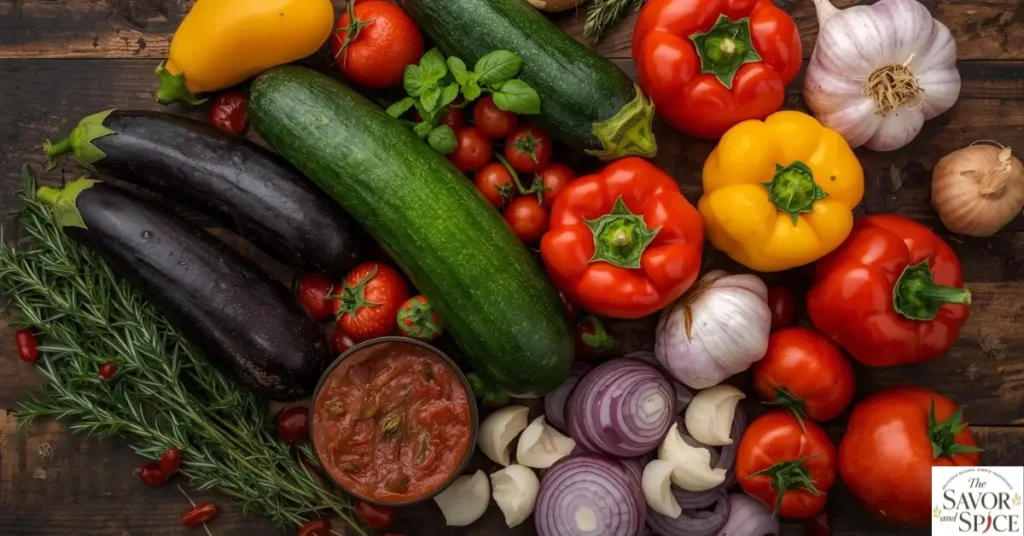
- Olive Oil – 4 tbsp
I always use extra-virgin olive oil for its rich, fruity flavor. Divide it into parts. Some for sautéing the aromatics and some to brush over the veggies for a silky finish. - Garlic – 4 cloves, minced
Garlic adds a warm, aromatic touch that makes the kitchen smell irresistible. I like to press it lightly to release its full flavor. - Onion – ½ small, chopped
Adds natural sweetness and depth to the sauce. Cooking it until soft brings out a cozy, comforting aroma. - Carrot – ⅓ cup, shredded
The carrot adds subtle sweetness and a hint of color. I always shred it finely so it melts perfectly into the sauce. - Crushed Tomatoes – 14 oz
The base of your stew. I like to use ripe, canned tomatoes for a rich, tangy flavor that balances the sweetness of the veggies. - Dried Basil – 2 tsp
Adds herbal freshness and complements the natural flavors of the vegetables beautifully. - Dried Parsley – ½ tsp
Brings a subtle, earthy note that rounds out the sauce. - Eggplant – 1 small, sliced ⅛ inch thick
Gives a lovely purple hue and tender texture. I usually soak slices briefly in salted water to reduce bitterness. - Zucchini – 2 small, sliced ⅛ inch thick
Adds green color and a light, fresh flavor. Slice evenly so it cooks perfectly alongside the other vegetables. - Roma Tomatoes – 3, sliced ⅛ inch thick
For juiciness, color, and a fresh tomato flavor that brightens the dish. - Salt & Black Pepper – To taste
Simple seasoning that balances all the flavors naturally.
How to Make Ratatouille From Scratch
Follow these simple steps to create a flavorful and beautiful ratatouille that will wow everyone at your table:
Prep your oven and your mood
Start by preheating the oven to 375°F (190°C). I always do this before anything else. It gives me a few quiet minutes to breathe, tidy my counter, and get into that cozy “let’s cook something comforting” mode.
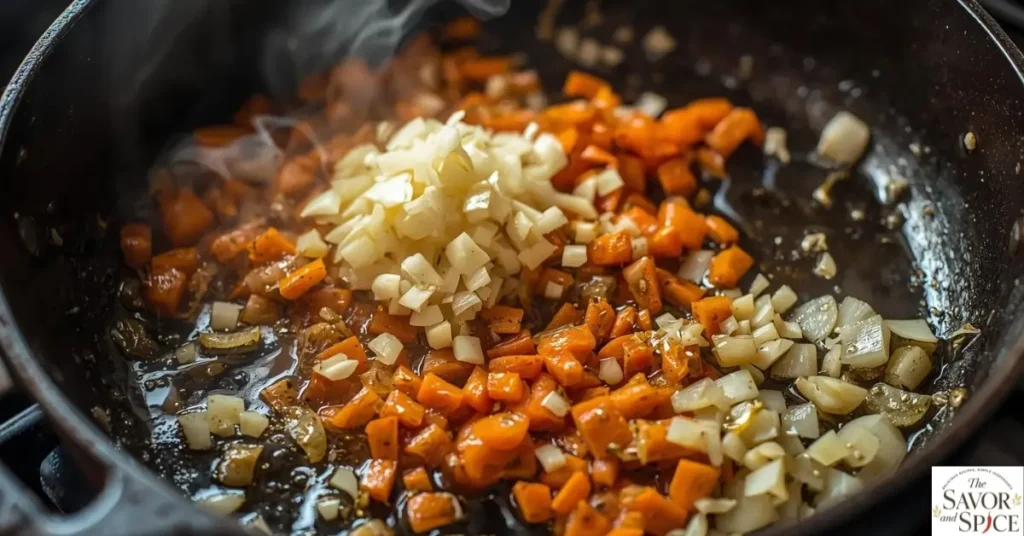
Sauté the aromatics (this is where the magic begins)
Heat 2 tablespoons of olive oil in a large pan over medium heat. Add the chopped onion, minced garlic, and shredded carrot.
As soon as the garlic hits the pan, the smell is heavenly. Cook everything for about 5 minutes, just until softened. This step builds the foundation of flavor, so don’t rush it.
Create your rich tomato base
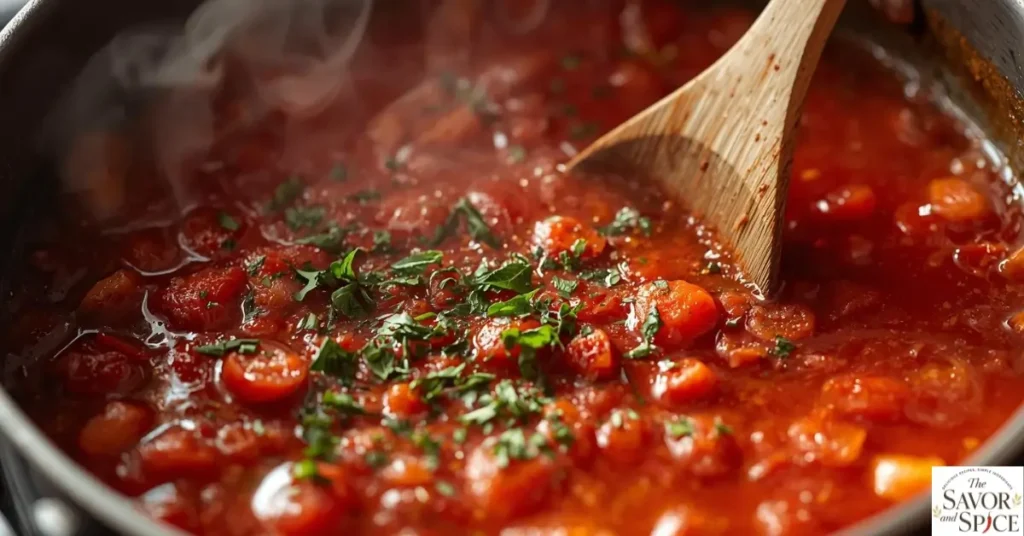
Pour in the crushed tomatoes, sprinkle in the dried basil and parsley, and give everything a gentle stir. Let this simmer for 15 minutes, uncovered.
I love tasting the sauce at this point, not for seasoning alone, but because it already feels like a warm hug. Adjust salt and pepper here so the flavor feels balanced and bright.
Pour the sauce into your baking dish
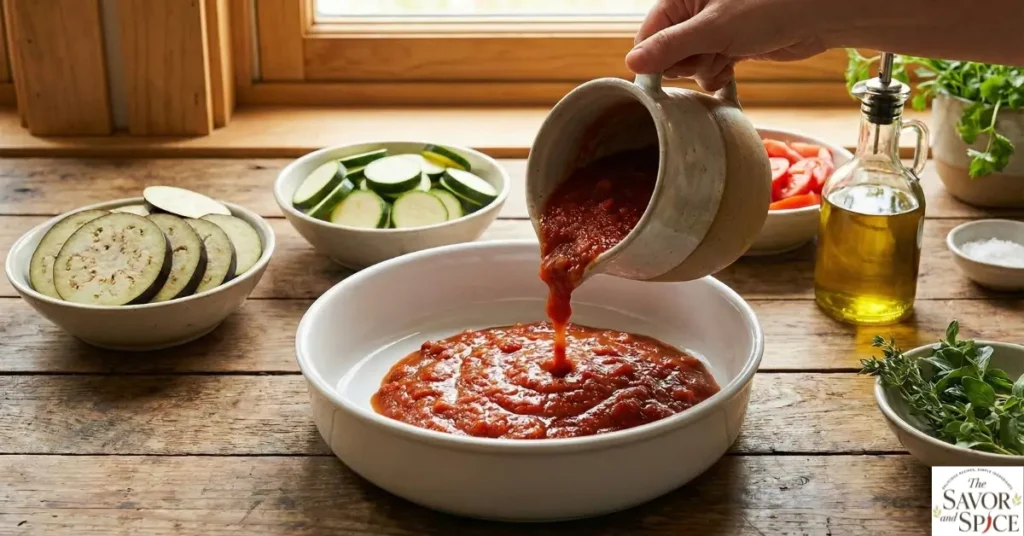
Once your sauce thickens slightly, transfer it into a 2-quart baking dish. Spread it evenly so every bite later has that gorgeous tomato flavor underneath.
Slice and layer the vegetables (my favorite part)
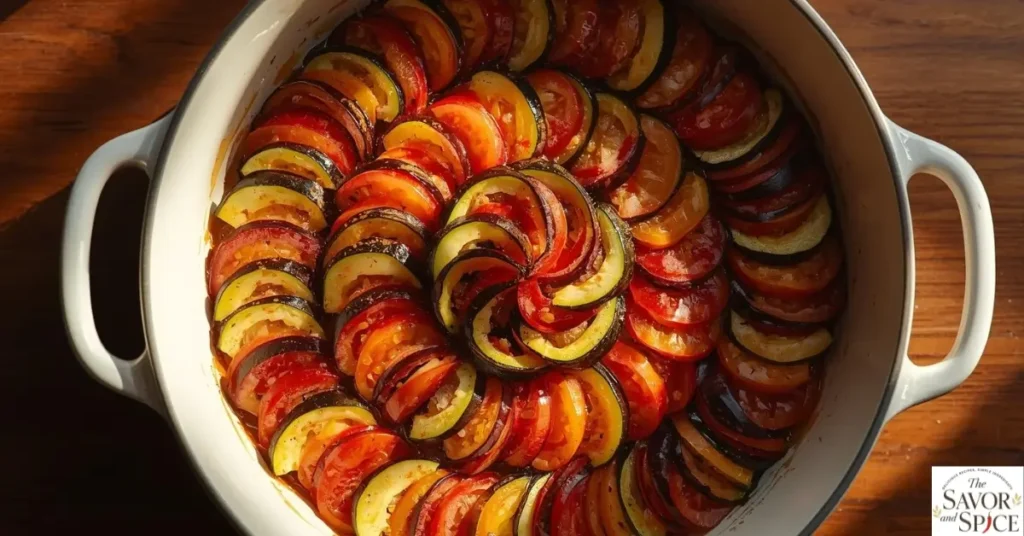
Arrange your eggplant, zucchini, and tomato slices in a pretty circular pattern. I like alternating the colors such as green, red, and purple. It’s like a rainbow spiraling from the outer edge to the center.
It looks fancy but feels therapeutic, almost like art therapy with vegetables.
Brush with olive oil for that glossy finish
Drizzle or brush the remaining 2 tablespoons of olive oil over the veggie slices. This helps them roast beautifully and keeps the surface from drying out.
Cover and bake – let the oven do the hard work
Cover the dish with foil and bake for 30 minutes. This steams the veggies gently and keeps them soft and moist. Then uncover and bake for another 30-40 minutes, or until the vegetables are tender and slightly caramelized on top.
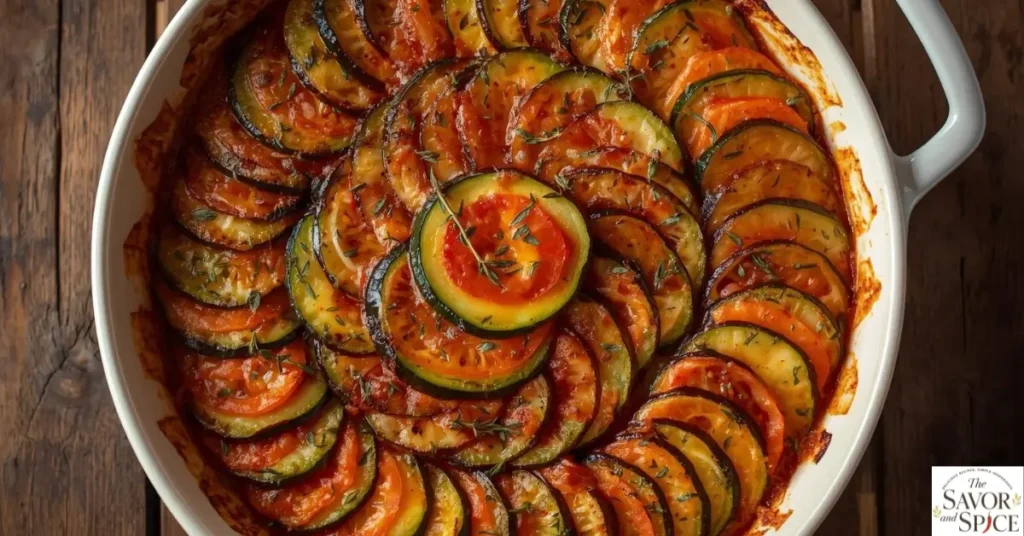
Serve hot and enjoy the cozy vibes
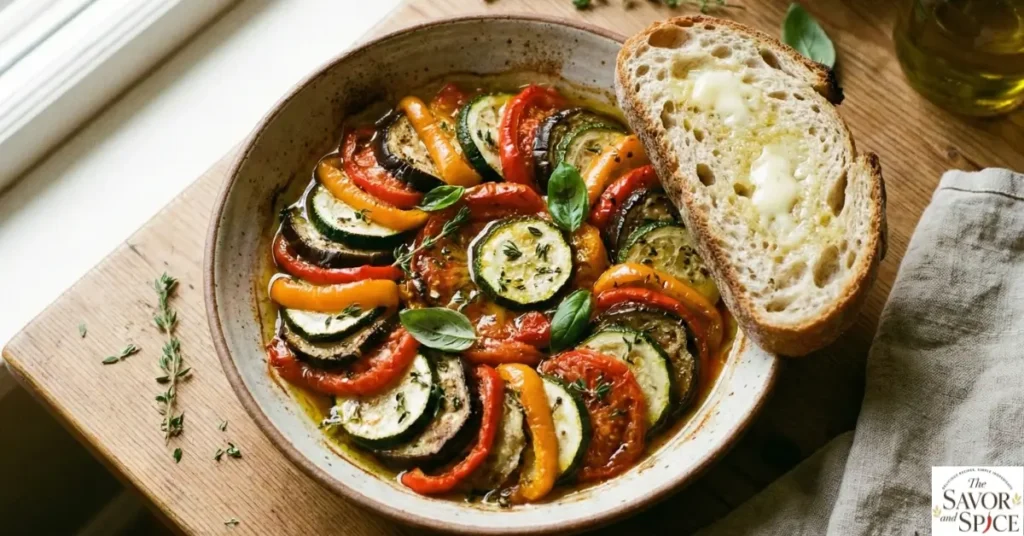
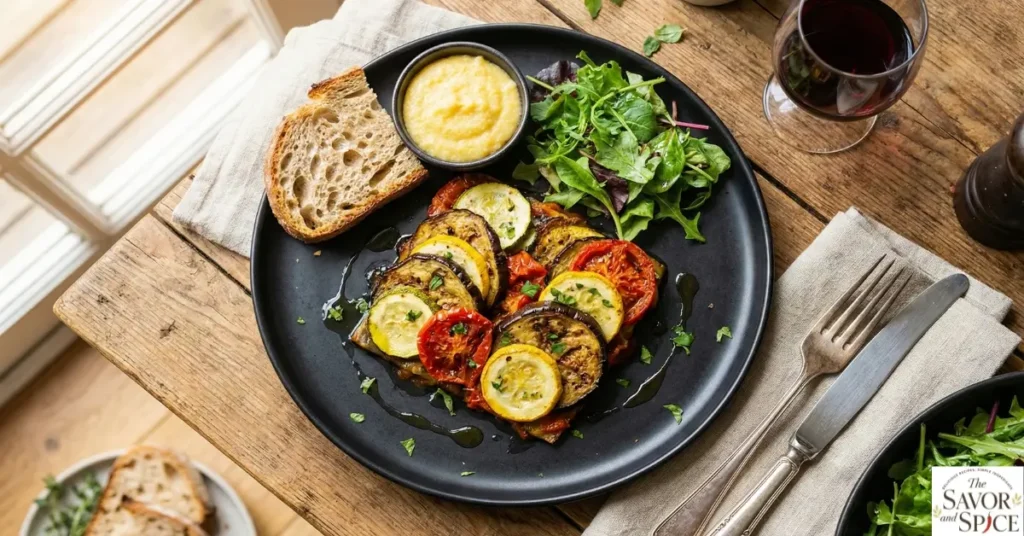
Ratatouille tastes best when served straight from the oven. I love pairing it with crusty bread or a simple pasta. It feels rustic, warm, and deeply satisfying.
Expert Tips for Making the Best Ratatouille
- Use the freshest vegetables you can find because ratatouille tastes best when the produce is bright and firm.
- Slice all the vegetables evenly so they cook at the same speed and look beautiful when layered.
- Taste your tomato sauce before adding it to the dish to make sure the seasoning feels balanced and flavorful.
- Cover the baking dish during the first half of cooking to keep the vegetables soft, moist, and protected from burning.
- Choose a good-quality olive oil since it adds richness and brings out the natural flavors of the vegetables.
- Let the ratatouille rest for five minutes before serving so the flavors settle and become even more delicious.
- Pair it with simple sides like bread, pasta, or salad to complete the meal without overpowering the dish.
What to Serve With Ratatouille Dish
Ratatouille is a versatile dish that pairs wonderfully with a variety of sides and mains. For a light and satisfying lunch, serve it with Italian Herb and Cheese Bread, perfect for soaking up the rich tomato sauce, or enjoy it alongside a fresh stir fry with bell pepper and broccoli, which adds a crunchy, colorful contrast to the tender baked vegetables.
If you want a hearty dinner, pair ratatouille with fried butter chicken for a rich and flavorful combination, or balance the meal with a zesty taco salad that brightens the plate and complements the natural sweetness of the vegetables. No matter how you serve it, ratatouille is flexible enough to fit any meal, making it a perfect choice for both lunch and dinner while letting you get creative with your favorite sides.
Nutrition Facts for Homemade Ratatouille
Here’s an estimated nutritional breakdown for one serving of this easy ratatouille recipe. Keep in mind that values may vary slightly depending on the size and type of vegetables you use, but this gives you a good idea of its healthy profile.
| Nutrient | Amount per Serving | % Daily Value* |
|---|---|---|
| Calories | 140 kcal | 7% |
| Carbohydrates | 13 g | 5% |
| Protein | 3 g | 6% |
| Fat | 10 g | 15% |
| Saturated Fat | 1 g | 5% |
| Sodium | 101 mg | 4% |
| Potassium | 577 mg | 12% |
| Fiber | 4 g | 16% |
| Sugar | 7 g | – |
| Vitamin A | 1,731 IU | 35% |
| Vitamin C | 25 mg | 28% |
| Calcium | 55 mg | 6% |
| Iron | 2 mg | 11% |
Pro Tip: This dish is naturally low in calories and packed with vitamins, making it a perfect addition to healthy lunch or dinner plans. Using fresh, seasonal vegetables enhances both flavor and nutrient content.
Can Ratatouille Be Made Ahead of Time?
Absolutely! Ratatouille is one of those versatile dishes that actually tastes even better when prepared ahead. Making it a day in advance allows the flavors of the fresh vegetables, herbs, and spices to meld beautifully, giving you a richer, more harmonious taste. You can prepare it fully, refrigerate it, and simply reheat before serving.
This makes it perfect for meal prep, dinner parties, or busy weeknights when you want a comforting dish ready to go. For best results, store it in an airtight container in the fridge for up to 2-3 days, and gently reheat on the stove or in the oven to maintain its texture.
How to Store and Reheat Classic Ratatouille
Keeping your Ratatouille fresh is easy and ensures every bite is flavorful. After cooking, allow it to cool completely, then store in an airtight container in the refrigerator for up to 3 days. For longer storage, freeze in a freezer-safe container for up to 2 months perfect for meal prep or busy weeknights.
Can I Freeze Ratatouille for Later?
Yes! Ratatouille freezes beautifully, making it perfect for meal prep or saving leftovers. After cooking, let it cool completely, then transfer it to a freezer-safe container or heavy-duty freezer bag. It can be frozen for up to 2 months without losing its flavor or texture.
To reheat, gently warm it on the stove over low heat, stirring occasionally to preserve the vegetables’ texture. You can also reheat in the oven at 350°F (175°C) until piping hot. Avoid long microwave reheating, as it can make your Ratatouille mushy. Slow reheating brings back the rich, layered flavors that make classic Ratatouille so comforting and delicious.
How Do You Make Ratatouille Soft Without It Getting Mushy?
To make Ratatouille tender without turning it mushy, slice the vegetables evenly and cook them separately at first, allowing each to soften perfectly. Use medium heat and cook slowly, adding just enough olive oil to enhance flavor while preserving texture. Avoid over-stirring, and combine the vegetables only when they’re nearly done to maintain their shape and prevent excess moisture. This method ensures a soft, flavorful Ratatouille where every vegetable retains its character.
Ratatouille Variations to Try
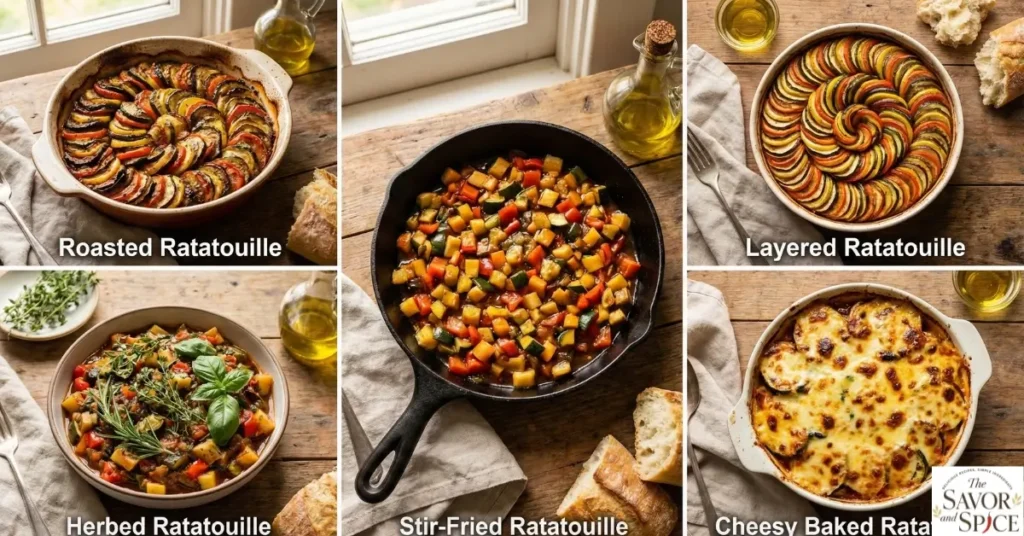
1. Roasted Ratatouille
Roasting the vegetables in the oven brings out a deeper, caramelized flavor, giving your Ratatouille a richer, slightly sweet taste.
2. Layered Ratatouille
Inspired by the classic French presentation, thinly sliced vegetables are beautifully layered for a visually stunning and elegant dish.
3. Stir-Fried Ratatouille
Quickly stir-frying the vegetables keeps them slightly crisp while preserving their natural flavors and vibrant colors.
4. Herbed Ratatouille
Adding fresh herbs like thyme, rosemary, or basil enhances the aroma and depth, making each bite more flavorful.
5. Cheesy Ratatouille
Sprinkle a bit of Parmesan, Gruyère, or goat cheese on top before serving for a creamy, indulgent twist on the traditional recipe.
6. Tomato-Based Ratatouille
Incorporating a rich tomato sauce gives the dish a saucier texture, perfect for serving over pasta, rice, or crusty bread.
Is Ratatouille Dish Healthy?
Yes! Ratatouille is a nutrient-packed, low-calorie dish that’s loaded with fresh vegetables like zucchini, eggplant, bell peppers, and tomatoes. It’s naturally rich in vitamins, minerals, and antioxidants, while being high in fiber and low in fat-especially when cooked with a moderate amount of olive oil. This makes it heart-healthy, good for digestion, and perfect for a balanced diet.
You can even enjoy it as a light main dish or a side, making it a versatile and wholesome choice for everyday meals. For more detailed nutrition information, you can check out the nutrition of Ratatouille.
Final Thoughts On My Classic Ratatouille Recipe
Ratatouille is more than just a classic French dish. It’s a celebration of fresh vegetables, rich flavors, and simple yet elegant cooking. Whether you make it ahead, freeze it for later, or try one of the delicious variations, this versatile dish is sure to impress. Give it a try and enjoy the harmony of flavors in every bite.
If you love this Ratatouille recipe, you’ll also enjoy exploring our collection of easy and flavorful dinner recipes designed to make your mealtime delicious and stress-free. Check them out and discover new favorites for your weekly menu. Want more eggplant recipes? Try our Eggplant Omelette (Tortang Talong) for another delicious way to enjoy this versatile vegetable.
Frequently Asked Questions About Ratatouille
Can Ratatouille be made vegan or vegetarian?
Absolutely! Classic Ratatouille is already vegetarian, and it’s naturally vegan if you avoid adding cheese or butter. It’s a perfect plant-based dish full of flavor.
Can I use frozen vegetables to make Ratatouille?
Yes, but fresh vegetables yield the best texture and flavor. If using frozen, thaw and drain them well to avoid excess water.
Is Ratatouille suitable for low-calorie or keto diets?
Yes! It’s naturally low in calories and carbs. To make it keto-friendly, skip starchy vegetables and focus on zucchini, eggplant, and peppers.
Can Ratatouille be served cold or as a salad?
Yes! Ratatouille tastes great both warm and cold. Chilling it in the fridge allows the flavors to meld even more, making it perfect as a summer salad or side dish.
How do I make Ratatouille flavorful without adding too much oil?
To keep it light but flavorful, use herbs like thyme, basil, or rosemary, a splash of vegetable broth, and cook the vegetables slowly. Roasting them brings out natural sweetness without excess oil.